


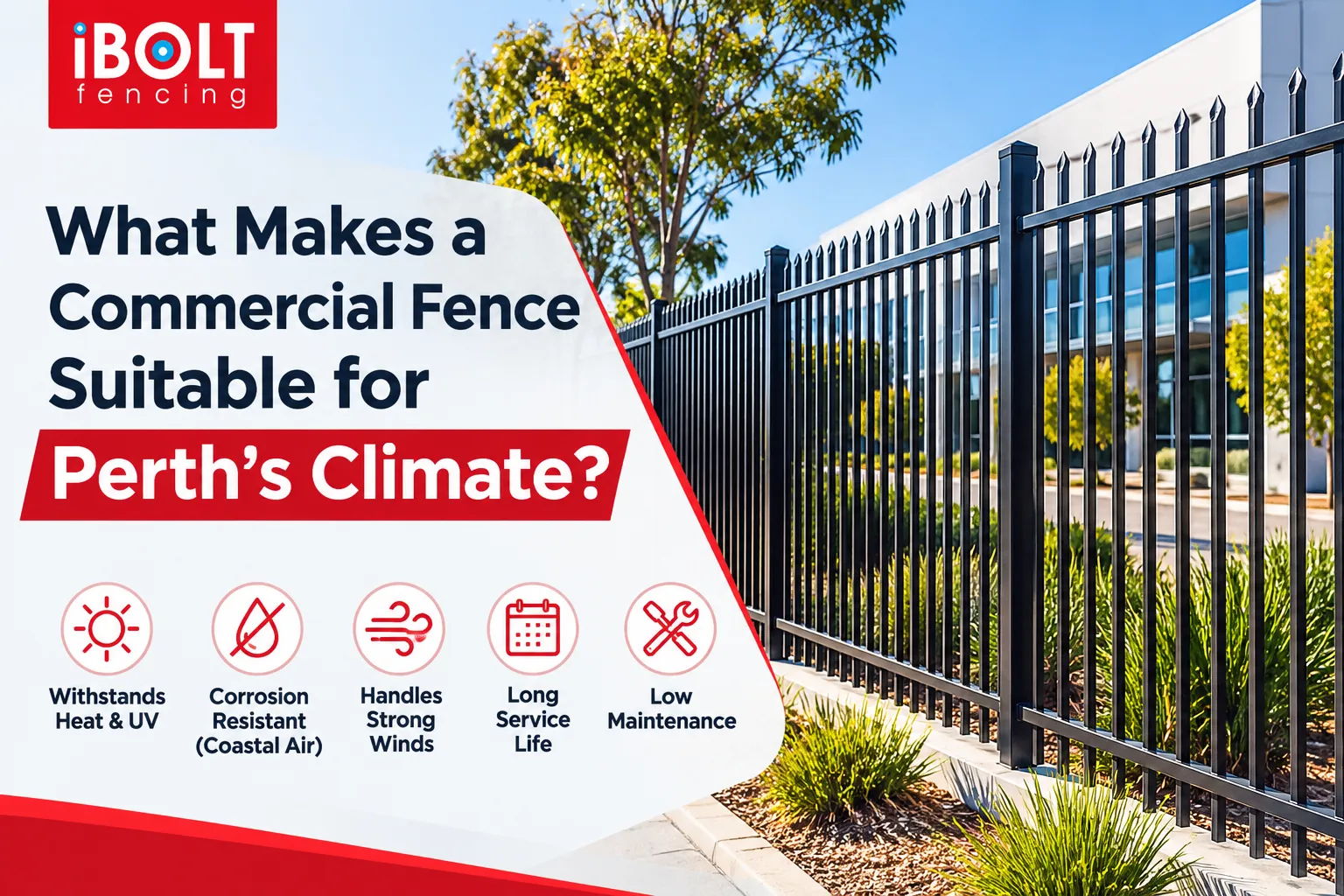
A commercial fence does more than mark where your property ends. In Perth, it also has to cope with long, hot summers, wet winters and, closer to the coast, a constant drift of salty air. Those conditions decide how long a fence keeps looking good and doing its job.
A fence can look solid on handover day and still need costly repairs a few years later if the steel, coatings or installation weren’t right for the site. For businesses weighing up commercial fencing perth, knowing how the local weather affects different systems is one of the smartest steps you can take before signing a quote.
How Does Perth’s Weather Affect Commercial Fencing?
Perth has a Mediterranean climate: hot, dry summers and cooler, wetter winters. Whether it’s commercial fencing around an office or industrial fencing around a yard, it has to stay strong through every season. Three conditions do most of the damage.
1. Intense Summer Heat and Sun
Perth summers bring long runs of high temperatures and harsh sunlight. Steel expands in the heat and contracts as it cools. Good-quality fencing is designed to handle that movement, but poor installation or cheap components can lead to loose fixings, misaligned panels or gates that stop closing properly.
Strong UV exposure can also fade or chalk some finishes over time.
2. Salt-Laden Coastal Air
Businesses near the coast face an extra challenge. Airborne salt settles on panels, joints and fixings. Add moisture and it speeds up corrosion, especially anywhere the protective coating has been scratched or chipped.
Sites around Fremantle, Cottesloe and coastal industrial areas usually need closer attention to corrosion protection. Galvanised steel, a suitable coating system and corrosion-resistant hardware all help a fence last longer in these conditions.
3. Winter Rain and Trapped Moisture
Perth may be known for dry summers, but winter rain brings its own problems. Water pooling around posts and footings can cause deterioration over time, particularly where drainage is poor.
Well-designed footings, good drainage and regular checks go a long way towards preventing trouble.
Which Fencing Materials Hold Up Best in Perth?
Every material offers a different mix of security, durability and upkeep. The best fit depends on where your property is, how much protection you need and how exposed the site is to the elements.
Galvanised Steel
Galvanised steel is a popular choice for both commercial fencing and industrial fencing because its zinc layer shields the steel underneath from rust. Hot-dip galvanising is especially useful where extra corrosion protection is needed.
Even so, a fence near the beach may need a heavier specification than one in an inland business park.
Powder-Coated Steel
Powder coating adds colour and an extra protective layer when it’s specified and applied properly. You’ll often see it on garrison fencing and security gates, where appearance matters as much as toughness.
For harsh sites, a galvanised base with a quality powder coat over the top often outperforms a single, poorly matched finish.
Chain Mesh
Chain mesh is widely used around warehouses, storage yards, schools and long commercial boundaries. Its open weave allows visibility and airflow, and galvanised wire gives it practical resistance to rust.
Why Fence Design Matters as Much as Materials
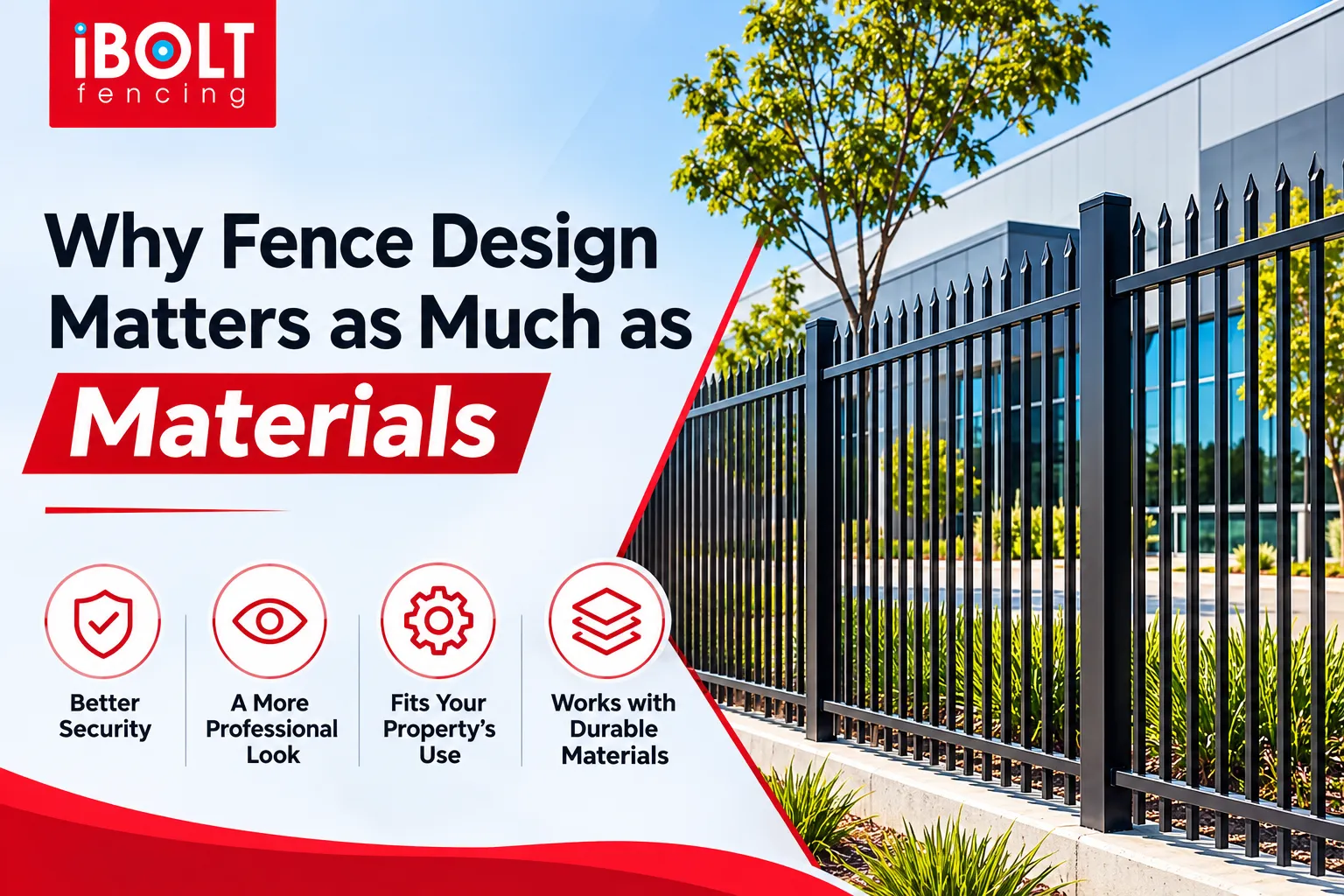
Picking the right material is only half the job. Design also affects how a fence handles Perth’s weather.
Open-style fences such as garrison and chain mesh let wind pass through more easily than solid panels, which can reduce the load on posts and footings. Wind loading still needs to be checked for each design, height and location, but an open profile is often a sensible start on exposed sites.
Other design details to get right include:
-
Post spacing: Correct spacing keeps the fence stable and straight.
-
Footings: Properly sized foundations help the fence resist wind and ground movement.
-
Fixings: Corrosion-resistant bolts and brackets reduce rust at the joints.
-
Drainage: Stopping water from pooling protects posts and bases.
-
Gates: Hinges, tracks and locks must handle daily use and outdoor exposure.
How Commercial Fencing Contractors Help You Get It Right
Working with experienced commercial fencing contractors perth makes it much easier to choose a system that suits your site’s conditions.
A good contractor looks well beyond the length of your boundary. They’ll consider how close you are to the coast, soil and ground conditions, wind exposure, drainage and how heavily the fence and gates will be used.
For example, industrial fencing at an inland warehouse may need a different coating and maintenance plan from a shopfront near the ocean.
Before you go ahead, ask your contractor:
-
Which materials suit this property’s exposure?
-
What corrosion protection is included?
-
How will posts and footings be installed?
-
Are the gates and hardware rated for frequent commercial use?
-
What maintenance and warranty conditions apply?
Clear answers let you compare quotes on value, not just on the upfront price.
Simple Maintenance That Extends a Fence’s Life
Even tough commercial fencing needs a little care. Regular checks catch small issues before they turn into expensive repairs.
Quick Commercial Fence Maintenance Checklist
-
Look over posts, panels and gates for visible damage.
-
Check welds, joints and fixings for early signs of rust.
-
Wash off dirt and salt build-up with a suitable cleaning method.
-
Inspect coatings for scratches, chips or fading.
-
Keep gate hinges, tracks and locks working smoothly.
-
Check drainage around footings after heavy rain.
Coastal sites usually benefit from more frequent inspections and cleaning. Always follow the manufacturer’s guidance.
What to Look for in a Commercial Fencing Company
Choosing an experienced commercial fencing company is important when investing in long-term property security. Price matters, but it shouldn’t be the only thing you compare.
Look for relevant project experience, sensible material recommendations and clear installation specifications. A trustworthy provider should explain why a particular system suits your property instead of offering the same product for every job.
It also pays to compare written quotes side by side, including workmanship terms, coating specifications and expected maintenance.
Why Choose iBOLT Fencing?
iBOLT Fencing delivers commercial and industrial fencing solutions for businesses across Perth and Western Australia. Here’s what sets us apart:
-
Systems for every site: Our range covers garrison fencing, palisade fencing, chain mesh fencing and security gate solutions for commercial and industrial applications.
-
Climate-aware recommendations: We factor in coastal exposure, heat, rain and drainage when specifying materials and finishes.
-
Site-specific advice: We look at how your property operates and what you need to protect before suggesting a system, rather than pushing one product for every job.
-
Gates built for daily use: We plan pedestrian and vehicle access around your traffic flow, security and safety requirements.
-
Transparent quotes: You’ll get a clear breakdown of what’s included, so you can compare options with confidence.
-
Local Perth team: We know the conditions and challenges WA businesses face, from coastal suburbs to inland industrial estates.
Whether you’re securing a warehouse, school, commercial premises or industrial facility, we’ll help you find a fence that suits your security needs, environment and maintenance budget.
Frequently Asked Questions
What’s the best fencing material for Perth’s coastal areas?
Properly specified hot-dip galvanised steel, often paired with a suitable coating system, is a practical choice. The final pick should depend on how much salt exposure the site gets and the maintenance you can commit to.
Does Perth’s summer heat damage metal fencing?
Steel naturally expands and contracts with temperature changes. A well-designed, correctly installed fence handles this movement, while a quality coating protects the finish from UV.
Is powder-coated fencing a good choice for commercial properties?
Yes. Powder-coated steel gives a durable, professional finish when it’s correctly specified, applied and maintained for the site’s conditions.
How often should commercial fencing be inspected?
It depends on the site’s exposure, the fence’s condition and the manufacturer’s advice. Coastal and high-traffic properties usually need more frequent checks than sheltered sites.
Final Thoughts
Perth’s climate puts commercial fencing to the test with strong sun, salty coastal air and seasonal rain. The right materials, coatings, design and installation make a real difference to how long your fence lasts.
The goal is a system that keeps your property secure, stands up to local conditions and stays easy to maintain for years to come.